
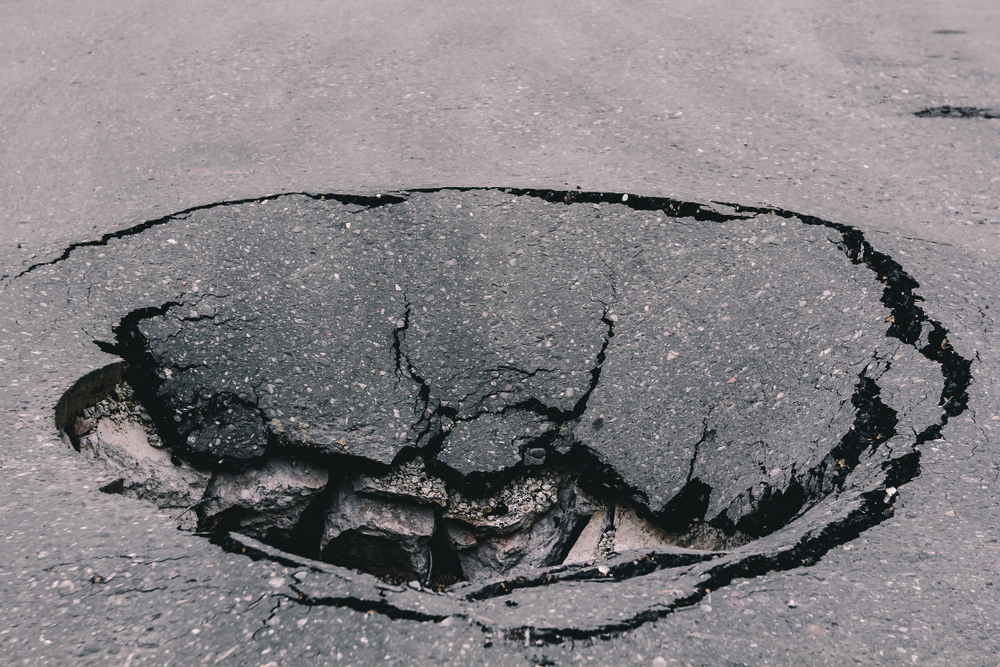
What Causes Sinkholes in East Tennessee?
July 5, 2026 1:09 pm Leave your thoughtsEast Tennessee is known for its beautiful rolling hills, limestone bluffs, and scenic valleys. While these natural features make the region unique, they also create conditions where sinkholes can develop. For homeowners and property owners across East Tennessee, understanding why sinkholes form can help you recognize early warning signs before they become a costly structural problem.
Quick Answer
Sinkholes in East Tennessee are primarily caused by the region’s limestone bedrock, which gradually dissolves when groundwater moves through it. Heavy rainfall, changes in drainage, aging infrastructure, and construction activity can all accelerate the process, causing the ground above underground voids to collapse. While not every depression in a yard is a sinkhole, unusual ground movement should always be professionally evaluated.
What Local Readers Should Know
- East Tennessee sits within one of the country’s most active karst regions, where limestone naturally dissolves over time.
- Heavy seasonal rainfall and flash flooding can increase the likelihood of sinkhole activity by washing soil into underground cavities.
- Areas throughout Knox County, Blount County, Sevier County, Anderson County, and surrounding communities experience varying levels of sinkhole risk because of local geology.
- Small warning signs often appear months or even years before a major ground collapse.
- Professional evaluation is the safest way to determine whether ground movement is cosmetic or indicates a developing sinkhole.
Why This Matters Locally
Sinkholes matter in East Tennessee because the region’s natural limestone formations make ground movement more common than in many other parts of the country.
The Valley and Ridge province, which stretches across much of East Tennessee, contains extensive limestone and dolomite formations. Over thousands of years, slightly acidic groundwater slowly dissolves these rocks, creating underground cavities. Eventually, the soil above those cavities may settle or collapse.
Communities near Knoxville, Maryville, Oak Ridge, Sevierville, and Clinton all contain areas where karst geology is present. While many sinkholes develop gradually, others can appear after extended rainfall or changes in drainage around a property.
At Holloway Construction, we understand how unsettling unexplained ground movement can be. We help property owners identify the cause of soil instability and determine the most appropriate repair approach before additional damage occurs.
Local Data and Field Observations
East Tennessee is recognized by the Tennessee Department of Environment and Conservation and the U.S. Geological Survey as an area with widespread karst terrain.
Karst landscapes form when limestone dissolves beneath the surface, creating caves, underground streams, and voids. This geology explains why portions of East Tennessee experience more sinkhole activity than many neighboring regions.
From our field observations, we commonly see sinkhole concerns become more noticeable after:
- Extended periods of heavy rainfall
- Poor surface drainage
- Water line leaks
- Stormwater runoff concentrating in one location
- New construction that changes natural drainage patterns
Every property is different, making professional evaluation essential before determining the best repair strategy.
How Sinkholes Affect East Tennessee Properties
Sinkholes can affect foundations, driveways, landscaping, utilities, and drainage systems throughout East Tennessee.
Even relatively small sinkholes can lead to expensive structural problems if ignored. As soil shifts, foundations may settle unevenly, retaining walls can move, sidewalks crack, and underground utilities become vulnerable.
For commercial properties, unstable ground may also affect parking lots, stormwater systems, and building safety.
Because many sinkholes develop slowly, early intervention is often less invasive and less costly than waiting until significant collapse occurs.
Warning Signs of a Developing Sinkhole
Several warning signs can indicate that underground soil movement is occurring beneath your property.
Watch for:
- New cracks in foundations or exterior brick
- Depressions forming in lawns
- Doors or windows suddenly sticking
- Leaning fences or retaining walls
- Cracks in driveways or sidewalks
- Areas where standing water suddenly disappears
- Tilting trees or utility poles
- Separation between patios, porches, or additions and the main structure
One warning sign alone does not necessarily indicate a sinkhole, but multiple symptoms deserve prompt evaluation.
When to Call a Professional
Professional evaluation is recommended whenever unexplained ground movement appears on your property.
Homeowners can safely monitor small landscape depressions and photograph any changes over time. However, rapidly enlarging holes, structural cracking, foundation movement, or sudden ground collapse should never be treated as a DIY project.
Because underground voids cannot be accurately evaluated from the surface alone, experienced assessment is critical before deciding on repairs.
Common Causes of Sinkholes in East Tennessee
The most common causes of sinkholes in East Tennessee all involve changes beneath the ground surface.
1. Natural Limestone Dissolution
Groundwater naturally dissolves limestone over thousands of years, creating underground cavities that may eventually collapse.
2. Heavy Rainfall
Strong storms can wash loose soil into underground voids, causing the surface to settle unexpectedly.
3. Poor Drainage
Improper grading, clogged drainage systems, or concentrated roof runoff can increase erosion beneath a property.
4. Broken Water or Sewer Lines
Leaking underground utilities may wash away supporting soil and enlarge existing voids.
5. Construction Activity
Excavation, grading, or altered drainage patterns sometimes accelerate existing geological conditions.
6. Changes in Groundwater Levels
Extended wet or dry periods may shift groundwater movement, affecting underground support.
Prevention and Maintenance
While natural geology cannot be changed, proper drainage and regular inspections can reduce many contributing factors.
Helpful preventive measures include:
- Keep gutters and downspouts directing water away from foundations.
- Repair plumbing leaks promptly.
- Address standing water around the property.
- Maintain proper grading after landscaping projects.
- Monitor existing depressions for changes.
- Schedule professional inspections if new settlement appears.
Early detection often allows repairs before significant structural damage develops.
What to Expect From Professional Sinkhole Repair
Professional sinkhole repair focuses on stabilizing the affected area and preventing future movement whenever possible.
Depending on the cause and severity, repairs may include:
- Excavation of unstable soil
- Controlled backfilling
- Engineered compaction
- Drainage improvements
- Foundation stabilization
- Structural repairs when necessary
The appropriate solution depends on the property’s geology and the extent of underground voids.
Common Mistakes Property Owners Make
Ignoring early warning signs often allows sinkhole damage to become more extensive.
| Mistake | Consequence | Better Approach |
|---|---|---|
| Filling a depression with topsoil | The sinkhole often reappears | Determine the underlying cause first |
| Ignoring foundation cracks | Structural damage may worsen | Schedule an evaluation promptly |
| Redirecting water without proper grading | Drainage problems may increase | Improve drainage professionally |
| Waiting after heavy storms | Ground movement may continue unnoticed | Monitor changes and document them |
Common Local Scenario
A common East Tennessee scenario involves a homeowner noticing a shallow depression after several weeks of heavy rainfall.
Initially, the area appears to be simple settling. Over the following months, driveway cracks begin to develop, doors become difficult to close, and the depression slowly enlarges. A professional inspection identifies underground soil movement associated with a developing sinkhole, allowing repairs before major structural damage occurs.
Related Service Solutions
Several construction services may be used to address sinkhole-related damage depending on the property’s needs.
These may include:
- Sinkhole repair
- Foundation stabilization
- Structural repair
- Excavation
- Drainage improvements
- Site grading
- Soil stabilization
Comparing Your Options
Professional repair provides a more reliable long-term solution than temporary surface fixes.
| Option | Best For | Limitations |
|---|---|---|
| DIY filling | Minor landscape settling only | Does not address underground voids |
| Professional inspection | Determining the true cause | Requires onsite evaluation |
| Engineered repair | Confirmed sinkhole activity | Varies based on site conditions |
Service Areas
We proudly serve property owners throughout East Tennessee, including Knoxville, Maryville, Oak Ridge, Sevierville, Clinton, and many surrounding communities. Our experience with the region’s unique geology allows us to recommend solutions that fit local ground conditions.
The Cost of Ignoring Sinkholes
Waiting too long can allow small ground movement to become a major structural issue.
As underground voids grow, repairs often become more extensive and expensive. Addressing concerns early may help reduce damage to foundations, utilities, landscaping, driveways, and other structures.
Frequently Asked Questions
Are sinkholes common in East Tennessee?
Yes. East Tennessee contains widespread limestone formations that naturally create karst terrain, making sinkholes more common than in many other regions.
Can heavy rain cause sinkholes in East Tennessee?
Yes. Heavy rainfall can accelerate soil movement by washing loose material into underground cavities, especially in areas with existing limestone voids.
Are all yard depressions sinkholes?
No. Many depressions result from normal settling, erosion, or drainage issues. A professional evaluation helps determine the actual cause.
Which parts of East Tennessee have the greatest sinkhole risk?
Areas with extensive limestone geology generally have higher risk. Portions of Knox County, Blount County, Anderson County, and surrounding areas commonly contain karst formations.
Can a sinkhole damage my home’s foundation?
Yes. As supporting soil moves, foundations may settle unevenly, leading to cracks, sticking doors, and structural movement.
Should I fill a sinkhole myself?
No. Filling the surface without addressing the underground void may only hide the problem temporarily while allowing continued soil movement.
How are sinkholes repaired?
Repairs depend on the cause. Solutions may include excavation, engineered fill, drainage improvements, soil stabilization, or foundation repair based on site conditions.
When should I schedule an inspection?
As soon as you notice unexplained ground movement. Early evaluation provides the best opportunity to identify the issue before more significant structural damage develops.
Closing
Sinkholes are a unique challenge for many East Tennessee property owners because of the region’s natural geology. Understanding the warning signs and responding early can help protect your home or commercial property from more extensive damage. Whether the issue is natural soil movement, drainage problems, or foundation settlement, experienced evaluation is the first step toward a lasting solution.
Protect Your East Tennessee Property Before Ground Movement Gets Worse
If you’re concerned about a possible sinkhole or unexplained settlement, we’re here to help you understand what’s happening beneath the surface and recommend the right solution for your property.
[Contact Us Today to Schedule Your Property Evaluation]
Categorised in: Blog
This post was written by admin